
The Grace of Relevance
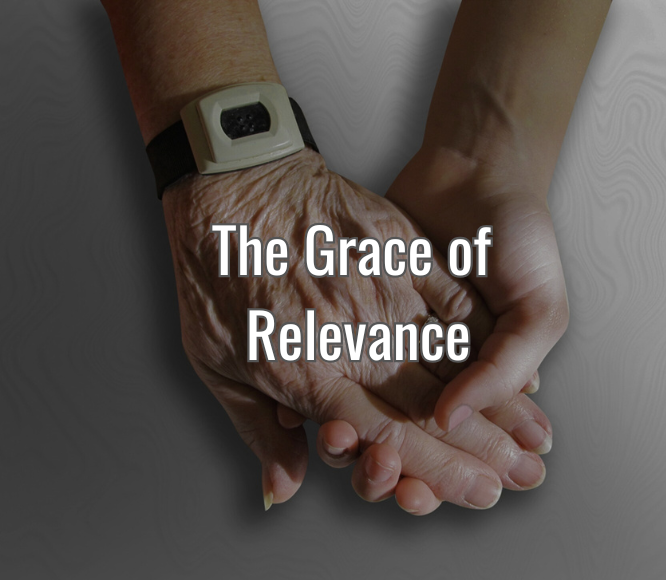
There is a quiet mythology that settles over the human lifespan: that relevance is the province of the young, that after seventy, life becomes a slow fade into the background hum of memory. But this is a story in need of revision, not resignation. If anything, the years beyond seventy can offer the richest canvas for meaning; a time when ambition is no longer mistaken for purpose, when the frantic need to prove oneself yields to the more generous desire to understand.Sophocles was in his eighties when he wrote Oedipus at Colonus, perhaps his most introspective and philosophical work. Michelangelo, in his seventies, sculpted the haunting Rondanini Pietà, its unfinished surface mirroring his own confrontation with mortality. And in a more contemporary register, Toni Morrison, then in her seventies, warned that “the function of freedom is to free someone else." She reminds us that the work of the elder is not to recede, but to lift.Cicero, in his treatise De Senectute, wrote that old age “can be the happiest period of life, if only we acquire the means that make it so.” These means, he explained, are not external accolades or possessions, but internal capacities; memory, friendship, contemplation, and the moral courage to remain engaged with life’s unresolvable questions. Viktor Frankl, writing after surviving the Holocaust, called meaning the “primary motivational force in man.” That force, he argued, does not diminish with age. In fact, it often grows stronger, refined by suffering and steeped in gratitude.What makes a life relevant, after all? It is not the speed at which we move or the volume at which we speak. Relevance, in its truest sense, arises from resonance. It comes from asking complicated questions alongside others: What does it mean to live well? How do we steward our time? How does one love when love must also include letting go?The search for meaning is a pilgrimage with no terminus. And that is its gift. It allows a seventy-year-old guy like me to pursue the writer's craft while I sit with my nine-year-old granddaughter as she begins to grasp reading... a shared orientation toward wonder. It is what compels a retired executive to serve on a home-owner association, a teacher to volunteer in a library, an old friend to pick up the phone after too much silence. It is the same yearning that sent Emily Dickinson to her writing desk, that stirred Georgia O’Keeffe to paint desert bones against blue sky in her nineties, that kept Leonard Cohen at the microphone, his voice thinner but his insight ever deeper.These are not acts of legacy. They are acts of presence.There is, too, a shifting etiquette around aging—a slow cultural recognition that invisibility, long regarded as a diminishment, might be something more subtle and sublime. To grow older is, in many ways, to surrender the sharp outlines of self. Our names are forgotten more often. Our faces are less frequently featured on social timelines. But within this softening lies a different kind of power: the freedom to observe without needing to be seen, to influence without needing to be credited.And in that opacity, there is a kind of grace.As Akiko Busch once wrote in The Atlantic, “All this may speak to a revised etiquette of invisibility. Opacity itself can work as a connective tissue. If humans do leave a mark, it is just some quick and temporary elusive imprint, nothing more than a fugitive logo or insignia. And it’s probably not the worst thing for any of us to imagine identity as an arrangement of letters written for a few moments on the clouded window of a train that is speeding out of view.”