
The Department of Wonder
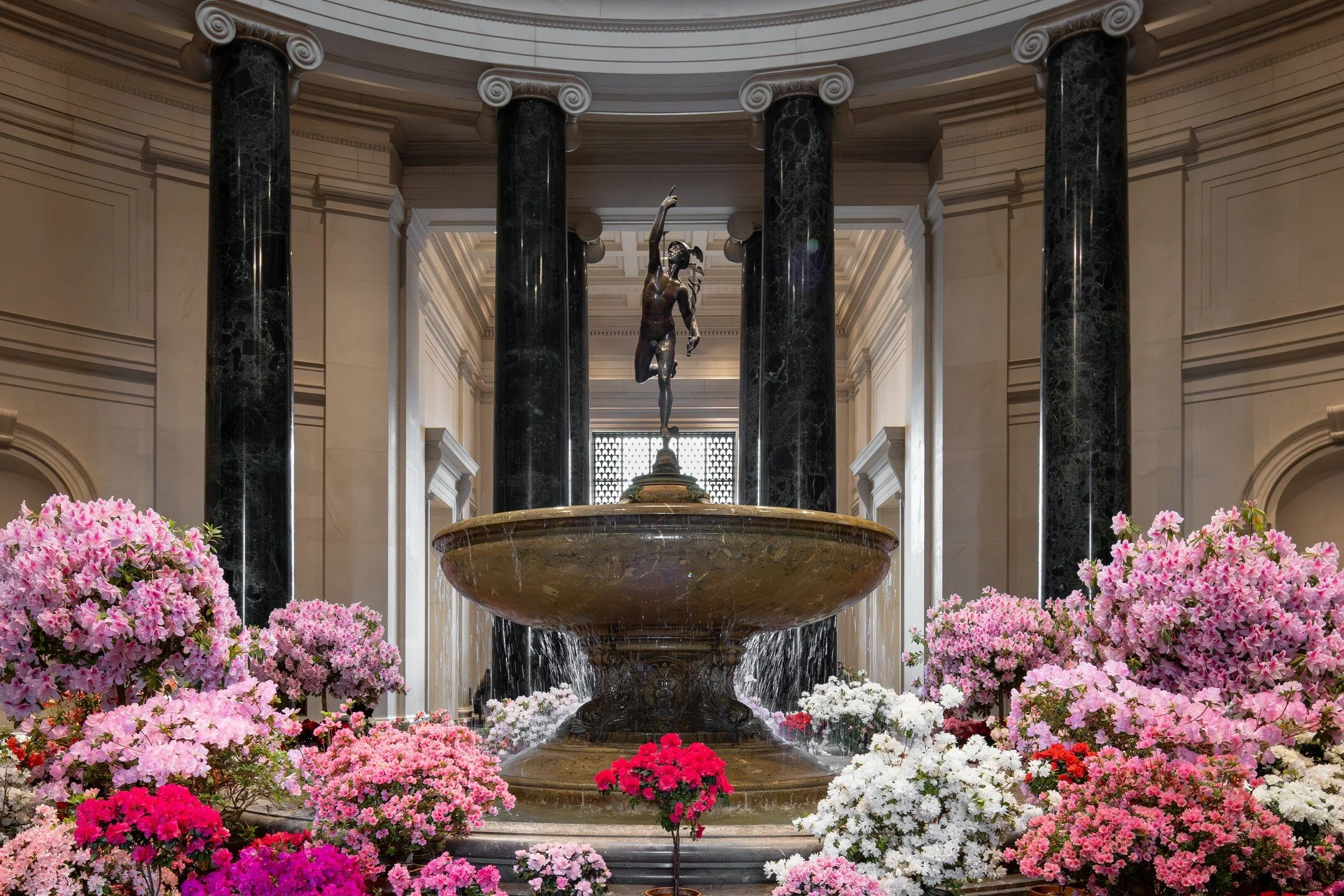
My mother loved art museums. She was a major proponent of the Ann Arbor Public Schools’ Humanities program and inculcated art history into our lives from an early age.
As Dana Milbank noted recently in The Washington Post, the modern museumgoer often suffers from a familiar fatigue: too many masterpieces, too little time, and an attention span trained by headlines rather than canvases. The National Gallery of Art’s response, a program called “Finding Awe,”offers a quiet rebellion against that speed. The premise is simple and faintly subversive: look at one work of art, slowly, until the rest of the world recedes.
Developed with the Berkeley psychologist Dacher Keltner, known as the spark plug behind The Greater Good Science Center, the ninety-minute workshops ask visitors to abandon the habits of cultural consumption. There is no rushing, no wall-text triage, no memorizing of dates. Participants are guided instead toward what the medieval philosopher Albertus Magnus called wonder—a brief “constriction of the heart” brought on by sustained attention. Contemporary science now gives this ancient idea a modern gloss: studies suggest that immersion in art can measurably reduce stress and inflammation.
The experience often begins with Rembrandt’s 1659 self-portrait. Looked at long enough, the painting ceases to be a historical object and becomes a human encounter: an aging face marked by loss and endurance, gazing back across centuries with unsettling intimacy. Other works follow, but for many the deepest ache of recognition arrives before Jasper Francis Cropsey’s vast Autumn—On the Hudson River, whose glowing landscape can summon memories, longing, and a physical sense of calm.
Nearly all participants report wanting more awe afterward. Milbank observed that its effects persist beyond the museum, sharpening one’s awareness of the everyday world. Wonder, it turns out, is not a rare epiphany but a habit, cultivated simply by stopping, breathing, and truly looking.
This struck me as I talked with my doc during my annual Medicare physical exam. “I’m forgetting things,” I said.
She laughed.
Once upon a time, she was in high school with my daughter, looking to grown-ups like me for inspiration. Now, she’s the one telling me to get more exercise and eat things that boost good cholesterol. She knows me well.
“You are the ultimate multi-tasker,” she told me. “Let me guess. You have a dozen browser tabs open, are working on three screens at once and can’t remember why.”
“Do I have early onset dementia?”
She shook her head. “I bet you forgot stuff way back when, too. Take time to admire the roses. You and Colleen raised two great kids, and from what I know, you’ve touched dozens if not hundreds of lives. Step back from your screens. Study the beauty around you. And be grateful.”
Let’s face it. Much of our world today is one big ball of stress. If you have even the tiniest heart, it’s probably hurting. My doc is right. I need more cardio, fewer french fries, and… most importantly a little more awe.